

Learning The Feynman Way and ChatGPT
“In my school days, I mean when I was a primary school student, we had to mug up ‘tables.’ I used to know tables from 2 to 30.”
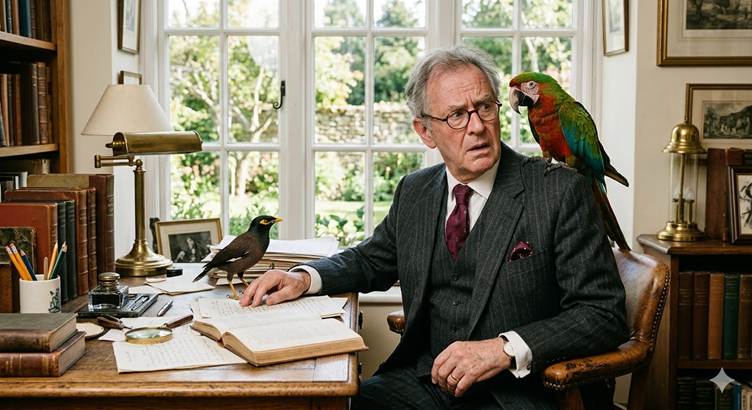
“Nobody does that now” Nina, my myna said. “Kids have calculators in their school bags, and they are allowed to use them in the exams.”
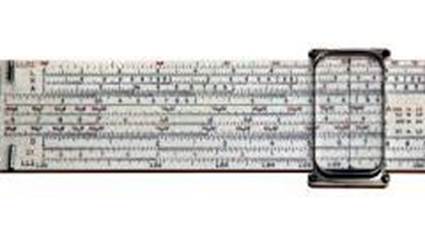
“Things have changed and things will change” Lulu, my parrot chipped in. “Engineers were using Slide rules; does anyone know how they look like now?”
“What made you think of the ‘tables?’” Nina asked.
“I can tell you. This old man must have been put off by ChatGPT. It does everything from math to poetry to making ppt!” Lulu commented.
“Hey! I have made a limerick with ChatGPT to fit the plot. Let me read it out to you:
An elder who lived in Sangli,
Tried solving all problems so gravely.
But his grandson, carefree,
Just used ChatGPT,
And beat the old man quite completely
“My friends, you are making fun of me. And I am from Mumbai, not Sangli.”
“Okay, here we go. I improved on the limerick by changing Sangli to Mumbai, and tell me if you like it?
An old man who lived in Mumbai,
Solved problems with many a cry.
But his grandson, carefree,
Just used ChatGPT,
And left the old man high and dry.”
“I am amazed at the speed of response. Your ChatGPT answers anything! Everything!! Why would students use books to learn now? They have all the answers ready with ChatGPT!”
“That’s the problem!”
“What do you mean?”
“There is a way to learn. Dr Richard Feynman, the Nobel laureate, has perfected the technique. In fact, the technique is named after him. ”
“Tell me”
“Feynman says four steps to learn – Choose and Study a concept, Teach it to a 12-year-old, Identify and Fill gaps, and Simplify and use analogies.”
“Easy said. That is difficult to do but I see the point. When you understand a concept well, you can explain it, by simplifying it.”
“And that is hard work!”
“Learning requires you to put your energy in learning, not in typing in ChatGPT.”
“Haven’t you heard of Planaria Experiment?
“What’s that?”
“Let me tell you its conclusion – “If someone fails to put sufficient energy into the learning process, they become subject to boredom.”
“Colin Wilson notes how often major writers, artists and musicians have had difficult beginnings, while those who have perhaps as much talent but an easier start in life seem to find it harder to rise above the second rank.”
“Hmmm ….”
“He says further, ‘Dickens, Shaw, Wells, Beethoven, Brahms, are examples of the first, Beckett and Schopenhauer of the second!’”
“Hmmm …. Let me think about what you are saying. Are you saying that we should put in efforts to learn, but not use AI tools?”
“No, that is not the point. I am saying that instead of using AI to solve problems or give us readymade solutions, we must develop the skills, tools, and mindsets of using AI to think things through.”
“Ah, that makes sense.”
“Notebook-LM is a good tool for learning.”
“I must try it.”
“Yes, this AI tool, Notebook LM allows you to learn in the manner which suits you. If you are a visual learner, you can get it to give you an infographic of the topic. If you prefer listening to a concept explained, you can generate an audio of the topic. Or even a video. I personally like a mind-map of the topic as it helps me see the inter-connections between concepts”.
“I like that – you are always ready to learn.”
“Yes, this tool even can help you test your understanding by designing an impromptu quiz just for you. Much like what Benjamin Franklin said, ‘Tell me and I forget. Teach me and I remember. Involve me and I learn’”
“Yes, that is a good insight. And that is what we have been saying too.”
“Confucious puts it succinctly, and it is so apt for the current situation….”
“Like?”
“He who learns but does not think, is lost! He who thinks but does not learn is in great danger.”
Lulu and Nina smiled. I nodded in agreement. Lulu hopped onto my shoulder while Nina moved closer.
Vivek S Patwardhan with Deepa Premkumar
“What you leave behind is not what is engraved in stone monuments, but what is woven into the lives of others.” All matter copyrighted.
“तुमचा वारसा म्हणजे तुमच्या मृत्यूशिळेवर कोरलेली अक्षरं नव्हेत. तुम्ही इतरांच्या आयुष्याची विणलेली भरजरी वस्त्रं हा तुमचा खरा वारसा ठरतो.” – सर्व मजकूर कॉपीराइट-संरक्षित आहे.
Lulu and Nina taking us through the AI.. that’s great. I recently watched a podcast with an economics professor who teaches in Harvard. He says there’s no alternative to spending time in learning. Also reminds us that AI can hallucinate!
Curiosity,Inquisitiveness leads to act of learning but now knowledge is commodity with Ai/ML tools at disposal to 👍🏼 in a way good it’s made World Flat on democratise knowledge who has access (now that’s getting political) on other had Googling & Clauding are new go to masters…. An interesting person we meet said OTP will always remain Observe,Think & Perseverance as act of learning🙏🏼
Interesting Sir . You are leaving your younger shagirds behind .
There is a wise man in Thane
Who knows sab things Jane Anjane.
His curiosity puts everyone else to shame.
If they followed suit they would also up their game.
Anything is possible when the mind is young and the spirit is aflame
Very nice read. AI is here to stay. Undoubtedly it is useful however the knowledge and wisdom of how and when to use it is key.
“AI is not a shortcut to ready-made answers; its true power lies in sharpening how we think through problems. But this requires strong subject knowledge — without it, hallucinations are inevitable. That risk stems from the user’s grasp of the domain, not the AI itself.”
Dear Vivek
Thanks for addressing sharing thoughts on thinking and Learning in the Chat GPT times .
Interesting ones –
“ Learning requires you to put your energy in learning, not typing in Chat GPT”
“He who learns but does not think is lost ….”
Great Read
Regards
Vineet
enjoyed this Vivek and learnt some things
Keep motivating us
I think it’s a well written blog which honestly showcases the dangers of ai. Because I agree. Ai has been used as a tool for decades. But generative ai hasn’t. And now it’s public property and it’s greatly impacting the youth. A lot of American teachers who are on tik tok are saying the younger generation refuses to learn. It’s a huge problem there because of the no kid left behind law which was renamed to something less memorable but holds the same ideals as the original law. Also how schools are given public funding is based on the schools performance. All this (and more) leads to lots of children not trying or not realising they aren’t learning until it’s too late. Because even if they turn in an empty page or an obviously ChatGPT response (some kids don’t even read the essays. Or change it. Or get rid of the prompt.) they still get 50% as the schools need them to get a grade or they lose their funding. It’s a huge issue as kids cannot think for themselves anymore in class.
If you are is interested he should listen to teacher testimonies. There’s loads on TikTok. Many have their own podcasts and such.
Insightful read! AI and learning or rather the lack of it are already being widely discussed, but I loved the way you wove learning tools and theories into the discussion. Right from rote learning to application-based learning – it’s pretty comprehensive. Plus, the right AI tool (Notebook LM) that can be used to ease out learning.
The crux is – use AI for learning, then try and solve problems by applying your learning, either yourself or by prompting AI (based on your learning). But do not use it to directly solve your problems!